Diamond clarity refers to the measure of a stone’s purity. Unlike size, which only partly determines value, clarity is a highly prized attribute because it speaks directly to a diamond’s overall quality and longevity.
Imperfections and inclusions are the key factors when assessing clarity. Diamonds form from carbon atoms under extreme pressure and heat, deep within the Earth over millions of years. Their signature sparkle and brilliance stem from a precise atomic arrangement, and any deviation from this ideal structure diminishes the diamond’s overall clarity.
Experts typically evaluate inclusions using a 10x magnification tool. This standardized approach enables the diamond industry to objectively assess the quality and purity of each stone.
The Grading System
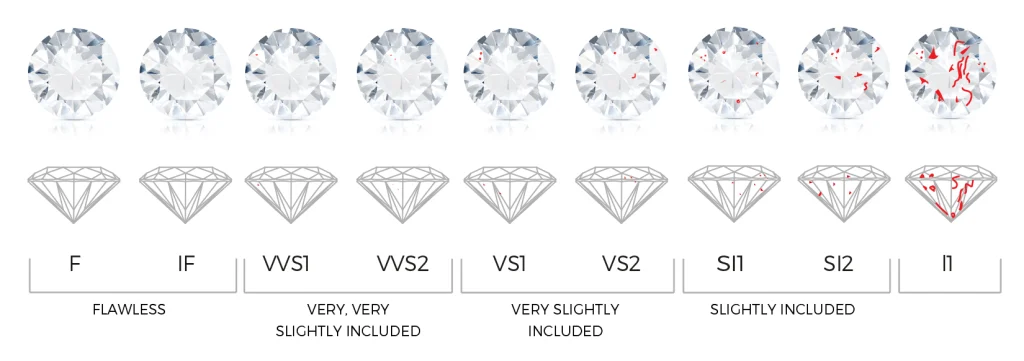
You’ve seen an overview of the clarity scale on the homepage, but what does it actually mean in practice? Let’s break it down:
Popularity: Diamonds graded VS1-VS2 are among the most sought-after in the industry. They appear flawless to the naked eye while remaining more affordable than truly top-tier stones, striking the ideal balance between beauty and cost.
Value: For budget-conscious buyers, the SI1 range is extremely popular. This clarity level features only minor inclusions that are not noticeable without magnification, ensuring that the diamond maintains its natural charm with only a slight compromise in purity.
Cut Choices: Keep in mind that brilliant-cut diamonds excel at concealing imperfections compared to step-cuts. This means you can opt for a slightly lower clarity grade without sacrificing the overall appearance and brilliance of the stone.
Diamond Clarity Grading
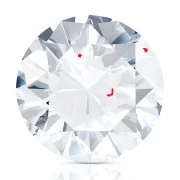
Clarity IF
Internally flawless
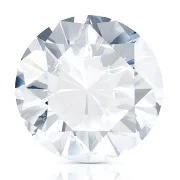
Diamonds in this grade have no visible flaws even when examined at x10 magnification.
Clarity VVS1
Very, very small inclusion.
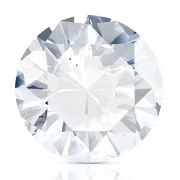
Diamonds with a VVS1 or VVS2 grade have barely any inclusions and these can only be found under very high magnification.
Clarity VVS2
Very, very small inclusion.
Diamonds with a VVS1 or VVS2 grade have barely any inclusions and these can only be found under very high magnification.
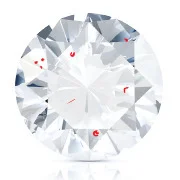
Clarity VS1
Very Small inclusion.
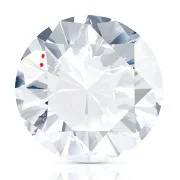
VS1 diamonds have a series of tiny inclusions that in common with the VS1 grade can only be discovered using x10 magnification.
Clarity VS2
Very Small inclusion.
VS2 diamonds have a series of tiny inclusions that in common with the VS2 grade can only be discovered using x10 magnification.
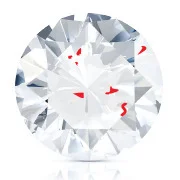
Clarity SI1
Small inclusion.
Slight inclusions are easily found under x10 magnification. SI1 graded diamonds have small inclusions that will be visible to the naked eye.
Clarity SI2
Small inclusion.
Diamonds have a greater number of inclusions that will almost always be visible to the naked eye. In comparison to I1 clarity they are more sparkling due to less number of inclusion.
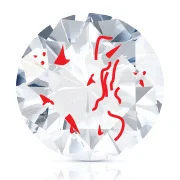
Clarity I1
Inclusion.
Diamonds have numerous inclusions that can easily be seen. Diamonds of this clarity represent incredible value compared with higher clarity grades. These diamonds are perfect for people not sensitive to the presence of inclusions, but want a larger size (or weight) of diamond.
What Types of Inclusions Exist?
Below are the different types of inclusions found in diamonds:
Laser Drill Holes
Small holes are precisely drilled into the stone, and acid is applied to lighten darker inclusions.
Beaded Girdle
Minute feathers are arranged around the stone’s perimeter, extending from the girdle.
Knot
A foreign material near the surface creates a slightly rough texture.
Indented Natural
A remnant of the rough diamond’s original form remains on the surface, causing a subtle indentation.
Cavity
A larger dent or opening can appear in the stone.
Chip
A minor surface break, sometimes resulting from less-than-perfect craftsmanship during cutting.
Chipped Culet
A small, noticeable spot, typically created through a deliberate process.
Cloud
A substantial cluster of inclusions that gives the appearance of a mist or cloud within the diamond.
Included Crystal
Essentially a stone embedded within another stone.
Pinpoints
Tiny black or white crystals that may appear individually or in clusters.
Feathers
Various types that resemble small fractures, much like cracked ice or glass.